South Africa
South Africa’s history comes with a lot of baggage.
The country has faced colonialism continuously and still has remnants of apartheid in its cities. One way this has persisted is through gentrification and disequal land use.
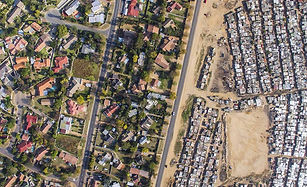
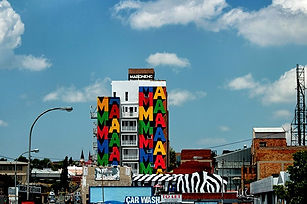
The displacement of South Africans, particularly Black South Africans, comes along with the dehumanization of those people. In the Maboneng Precinct, a tourist hotspot advertised on Vogue as “the Coolest Neighborhood in Johannesburg,” gentrification is prevalent.
Maboneng is a neighborhood that has a history of Black working class resilience. When the neighborhood was left in disarray by the 1970s, the city simply ignored it. Once they realized that they could redevelop the area to create a place to capitalize, the evictions began. In 2012, a Radiator Center Warehouse that was housing over 40 low-income residents was hijacked and forcibly removed these people from their home. These people were left with no other resources or help from the developers that evicted them.
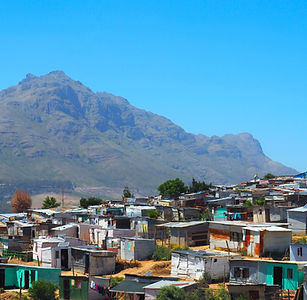
The contrast in the way the low-income residents are being treated compared to their tourist counterparts is indicative of colonial ideologies that haven’t been erased. The Maboneng Precinct’s boundaries are cut off by the N2 highway. In March of 2026, Cape Town Mayor Geordin Hill-Lewis announced that the city would be building a wall alongside the N2 highway to mitigate crime levels. However, people were very quick to point out that the aforementioned wall would block off many townships, or areas established during Apartheid that were underdeveloped, from being visible on the highway. This highway is also directly connected to the Cape Town National Airport which would allow the government to benefit from having a wall to block off tourists from seeing the underdeveloped areas local South Africans are forced to live in.
The wall is a very costly venture that has caused many of those living in the townships to wonder why the money being spent on the wall can’t be used to redevelop their areas.