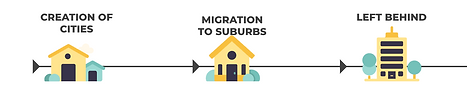
Gentrification has deep historical roots in both economic and racial discrimination.
Discriminatory housing practices systemically barred Black and Brown families from owning homes and lending policies stopped them from generating generational wealth. Over the past 50 years, 15% of cities across the U.S. have shown indicators of gentrification, disproportionately affecting neighborhoods of Color.
With an influx of higher-class households moving in, property value and rent increase. Low-income residents face direct displacement, forcing them to relocate due to an increasing cost of life.
Gentrification often results in a loss of cultural identity for these neighborhoods. Culturally significant businesses and community spaces are erased, pushing exclusionary displacement.
While some argue that gentrification brings economic benefits, gentrification’s benefits rarely outweigh the rising costs and loss of cultural heritage for the original residents.
Gentrification creates significant challenges for urban revitalization as many different sectors of society coincide with the process.